
Collections, Automation and Innovation
Today's libraries face unprecedented challenges in managing collections while maintaining fiscal responsibility. College and University presidents and public library boards increasingly recognize that library storage planning is pivotal for maintaining the integrity and accessibility of special collections and archives. The decisions made today about storage infrastructure will determine whether institutions can fulfill their research missions for decades to come.
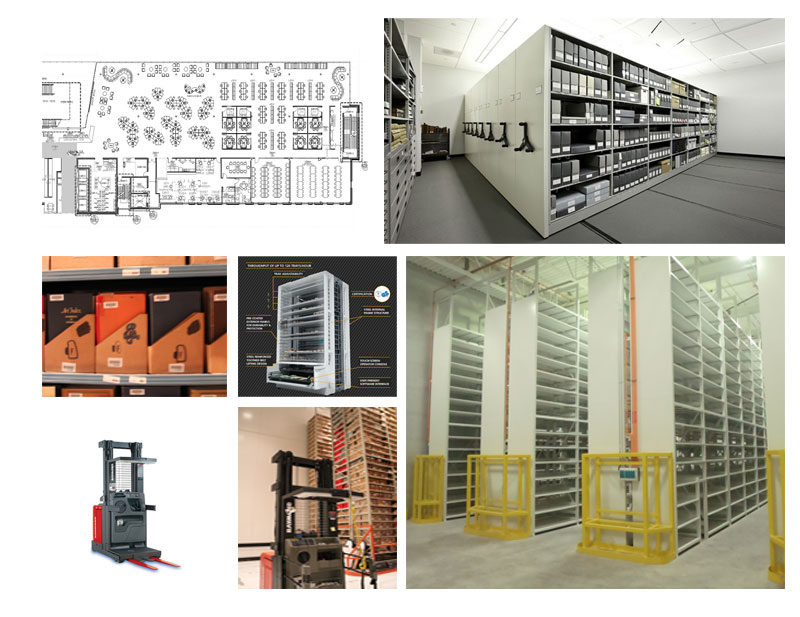
Our Archival Consulting Services
The landscape of education demands that libraries serve as deep research hubs, not merely repositories. Yet without automated storage planning, even the most distinguished collections risk deterioration, inaccessibility, and ultimately, irrelevance. Campus planners, architects, librarians and facilities managers understand that collection storage infrastructure represents a critical investment in institutional reputation and academic competitiveness.
Our expertise covers logistics specifications for collections including Autostore (AI Robotic Systems) and Automated Storage and Retrieval Systems (AS/RS). Here is an example of our High Density Storage Expertise. Example of library archive materials storage.

Special Collections Storage Solutions
For university librarians and special collections curators, the stakes couldn't be higher. Collections that took generations to build can be compromised because the print collections configuration are out-of-date.
Certainly, there are ways to improve storage with new technology. For example, we developed the most advance BookBot system of a University in Europe. This research enabled us to enhance organizational efficiency, facilitate easy retrieval and support academic and research activities. Our library consultant is an expert in all types of library storage systems. We enable institutions to get ahead of their peers.
Optimal Conditions: Environmental Standards for Preservation
Temperature and Humidity Control Systems
Properly designed storage solutions ensure that rare and valuable materials are preserved in optimal conditions through precise environmental control. Campus architects, facilities planners and archival managers should adhere to these standards:
General Collections: 65-70°F with 30-50% relative humidity, maintained within ±2°F and ±3% RH daily fluctuations.
Photographs and Film: 35-65°F with 30-40% RH, depending on format specificity.
Magnetic Media: 60-70°F with 20-30% RH.
Modern HVAC systems should feature:
Redundant cooling capacity to prevent catastrophic failures
Independent humidity control separate from temperature management
Zone-based systems allowing different conditions for varied materials
Energy recovery ventilation to balance preservation with sustainability
Collaboration and Planning
University presidents and campus planners face difficult decisions about allocating scarce campus real estate. Library storage planning is pivotal for maintaining institutional research capacity while optimizing space utilization.
Contemporary library storage planning is pivotal for maintaining the integrity and accessibility of collections through sophisticated technology integration.